

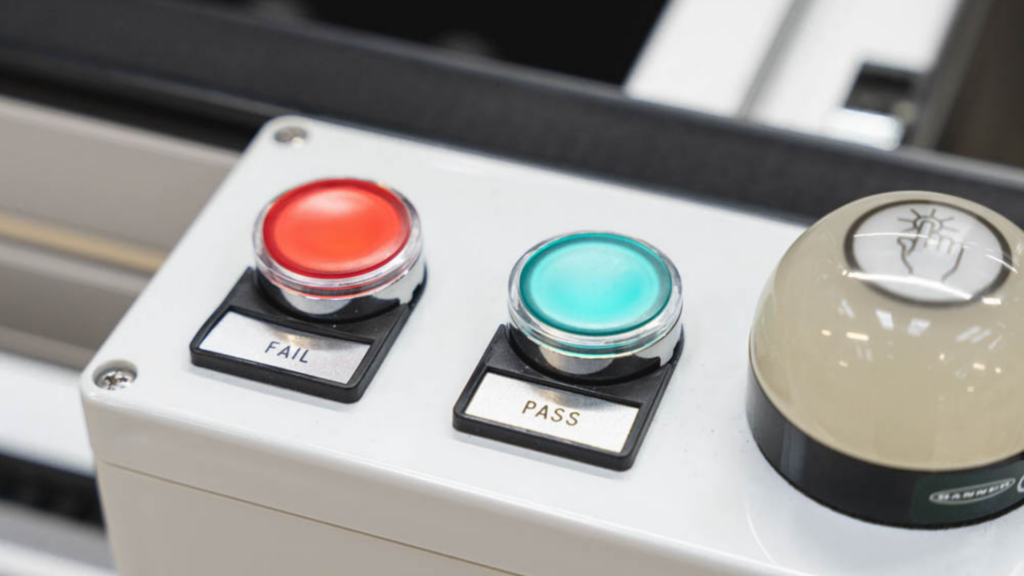
As manufacturers, we rely heavily on our workforce, but human beings are naturally subjective. We get tired, our eyes play tricks on us, and what looks like a clear “pass” to one operator on a Tuesday morning might look like a “fail” to another operator on a Friday afternoon.
When you rely on operators to interpret subjective test outcomes, you are introducing a significant level of risk into your production line.
At ALPHR Technology, we have seen firsthand how manual testing processes can lead to inconsistent quality, slipped deadlines, and frustrated teams. That is why we actively promote the use of integrated testing solutions to ensure consistent product quality. Let us dive into how automated pass and fail indicators can transform your factory floor.
The Hidden Costs of Subjective Testing
When you leave quality control entirely up to human interpretation, you open the door to variability. If an operator is manually testing an In-Vehicle Infotainment module, they might be checking speaker inputs, touchscreen haptics, or Bluetooth connectivity. If these checks are not automated, you are essentially guessing that the product meets the required standard.
This variability can lead to false positives, where defective parts make their way to your customers, or false negatives, where perfectly good parts are sent for costly rework. Both outcomes drain your resources and damage your reputation.
How Integrated Testing Solutions Change the Game
To eliminate these risks, you need to remove the guesswork. Our All-in-one Programming, Function Test, and EOL Solution for In-vehicle Infotainment Modules is a fully scalable production solution tailored specifically for testing automotive products. By integrating advanced programming, functional testing, and end-of-line testing into a single system, we take the subjective human element out of the equation.
Here is how our automated approach directly benefits your operations
- Objective Decision Making: Automated End-of-Line test stations can independently test-run current software configuration, button and dial controls, and Wi-Fi functionalities.
- Comprehensive Traceability: We integrate a comprehensive Statistical Process Control data collection package directly with the machine.
- Enhanced Quality Control: This data integration ensures precise monitoring and control of production processes.
- Consistent Records: Automated traceability allows you to maintain accurate and detailed records of the production process, facilitating easier identification and resolution of issues.
Adopting a Better Manufacturing Methodology
By introducing automated pass and fail indicators, you are not just upgrading a machine, but rather you are upgrading your entire manufacturing philosophy. At ALPHR, we rigorously employ a ‘No Faults Forward’ methodology.
This means that our systems are designed to ensure each step in the manufacturing process is successfully completed before the next step can begin. If a product fails an automated test, it is flagged immediately. Catching faults exactly at the point they occur saves you time and money, ensuring that only compliant products enter the supply chain.
Moving Forward with Confidence
Transitioning away from manual checks does not mean replacing your workforce. Instead, it means you can reallocate your team from dull, repetitive testing tasks to higher value-added activities. You get the peace of mind that comes with reliable, repeatable, and objective test results, while your team gets to focus on tasks that truly require human ingenuity.
If you want to guarantee your product quality and protect your bottom line, it is time to let the machines make the pass or fail decisions.