

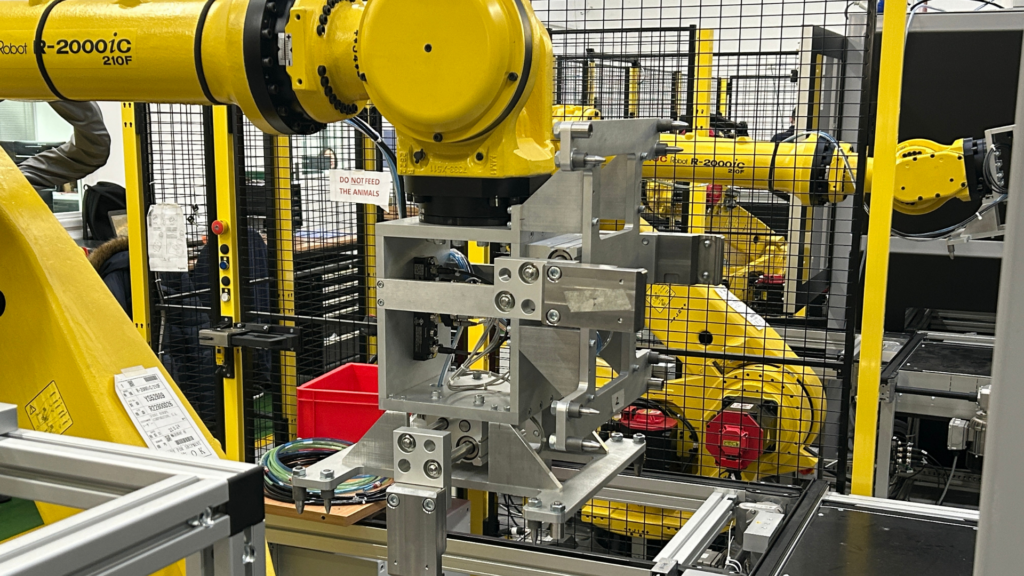
If you are running a high-volume manufacturing facility, predictability is your baseline for success. You need to know exactly how many units will roll off the line today, tomorrow, and next month. More importantly, you need to know precisely what each of those units costs to produce. Yet, if your line relies heavily on manual operations, achieving that predictability is an uphill battle.
Manual labour introduces a wave of unpredictable variables. Human performance naturally fluctuates due to fatigue, varying skill levels, shift changes, and simple distraction. This inconsistency makes it nearly impossible to lock down precise manufacturing labour element costs, leaving businesses exposed to missed deadlines and volatile profit margins.
To secure your throughput and your bottom line, you have to replace manual work with the consistency of automation.
The Cost of Human Fluctuation
When an assembly or testing process is manual, cycle times are never truly fixed. An operation that takes thirty seconds at the start of a morning shift might take forty-five seconds by Friday afternoon.
This variance might look minor on paper, but across a high-volume production run, those lost seconds compound rapidly. They throw your scheduling into chaos, create artificial bottlenecks, and make accurate labour cost forecasting look like guesswork. If you cannot guarantee how long a process takes, you cannot accurately calculate your cost per part. You are left vulnerable to sudden margin erosion, forcing you into a reactive cycle of overtime and rushed freight to meet customer demands.
Lock in Your Throughput with Fixed TAKT Times
Automated assembly lines completely rewrite this script by introducing a fixed, mathematically precise TAKT time. A machine does not get tired, it does not lose focus, and it performs the exact same sequence at the exact same velocity, cycle after cycle.
Whether it is a high-speed robotics system or a dedicated testing cell, automation brings absolute certainty to your production schedule. Every single step, from picking a component to executing a complex functional test, is perfectly timed. This level of control means your throughput isn’t a hopeful estimate based on average worker performance; it is a guaranteed metric. You can look at your production calendar and know down to the single unit exactly what your facility will deliver.
Shifting From Forecasting Risk to Financial Control
With automation handling the heavy lifting, your manufacturing labour element costs become a fixed, highly visible constant. This financial transparency allows you to quote new projects with absolute confidence, secure in the knowledge that your margins will not be eroded by operational variance. Furthermore, it gives you total control over your inventory and supply chain, allowing you to synchronise component deliveries precisely with your locked-in production output.
Building a Predictable Future
Relying on the unpredictable nature of manual assembly is a risk that modern manufacturers simply cannot afford to take. True resilience comes from knowing your numbers inside out.
At ALPHR Technology, we specialise in helping businesses transition from unpredictable manual processes to highly efficient, automated workflows.
We work closely with you to map out your specific goals, ensuring your new automated system delivers a clear, rapid return on investment. Let’s collaborate to build a stable, predictable, and highly profitable roadmap to automation for your business.