

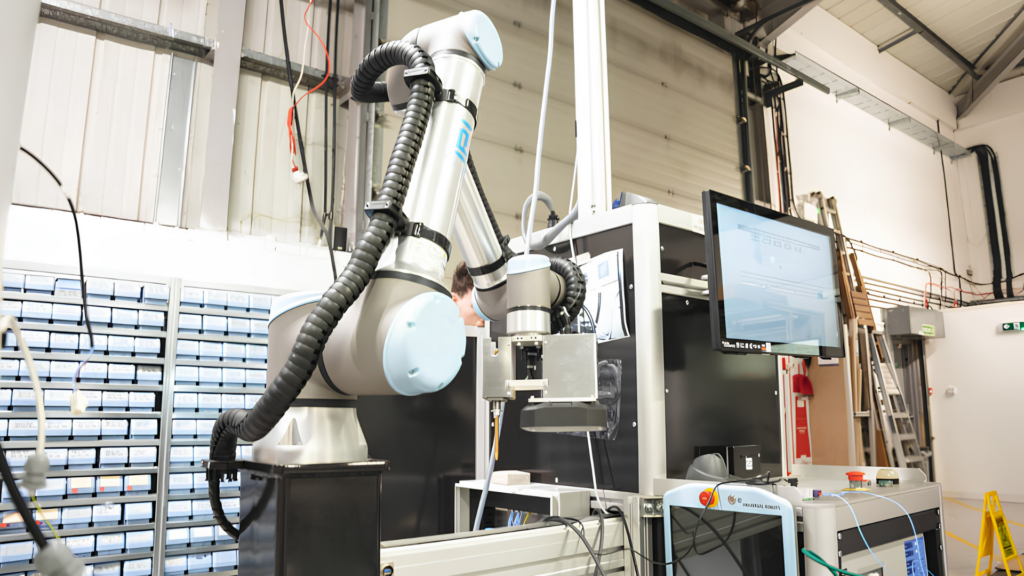
Automated traceability records every assembly and test result against each device’s serial number as the device is built. The record is complete when the device leaves the line, so your quality team can answer an auditor’s question about any unit from data. ALPHR Technology builds this data capture into its medtech assembly and test cells.
Medtech lines often run faster than their paperwork. A cell can assemble a device in seconds while the record of how it was built depends on someone filling in a traveller or typing results into a spreadsheet. A gap in that record can become an audit finding, widen a recall or leave you unable to show that a device met its specification.
What data should an automated medtech line capture?
At minimum, the who, what, where and when of every build: which components went into the device, which station assembled it, what its test results were and how long each step took. Our cells identify parts and assemblies with barcodes, 2D data matrix codes or RFID tags, and store all of it against the product’s serial number.
How does automated data capture support ISO 13485 records?
ISO 13485 requires a record for each medical device or batch that provides traceability and shows the quantity made and released. Many manufacturers still call this the device history record. When assembly and test results are captured at each station and uploaded to your manufacturing system, that record fills in as the device moves down the line, with no transcription step to get wrong.
How does serial-level data help with a field issue?
It narrows the investigation. If a component batch or a test station is under suspicion, you can list exactly which devices used that batch or passed through that station, and when. That keeps any recall to the units that are actually affected.
How do you stop a faulty device being recorded as good?
By making the line refuse to pass it. We design every machine around a principle we call No Faults Forward: each step must pass before the device moves to the next. A failed test is held at the station where it failed, and the record shows what failed and when.
Does the data connect to your existing systems?
Yes. All data relating to a product’s serial number can be uploaded to your manufacturing system, where it’s also available for shipping and stock control of finished goods. Our cells follow Industry 4.0 principles, connecting machines, sensors and devices so data can be collected at every point in the process.
Frequently asked questions
What is a device history record?
A device history record (DHR) is the production record for a medical device or batch: what it was made from, how it was assembled and tested, and when it was released. ISO 13485 requires an equivalent record for each device or batch.
Which identification methods does ALPHR use for traceability?
ALPHR Technology uses barcodes, 2D data matrix codes and RFID tags to identify parts and assemblies. The right method depends on the part and how it moves through the line.
Can automated traceability limit the size of a recall?
Yes. Because results are stored against serial numbers, you can identify exactly which devices used a suspect component batch or passed through a suspect process step, and recall only those.
If any step in your device records still relies on paper or manual entry, that’s the step an auditor or a recall will expose first. ALPHR can show you how automated data capture would work on your line.