

When you’re trying to maintain high product quality, relying on manual checks and operator judgement just isn’t enough anymore.
You need to know, not guess, that every step of the assembly process has been completed correctly. That each part is where it should be. That torque was applied properly. That nothing was missed or misaligned.
And the only way to get that level of certainty is by introducing smart checks and balances into your process, ones that work in real-time, automatically, and without slowing down your line.
We help manufacturers build that certainty into every system, using a combination of sensor technology, vision inspection, and intelligent feedback loops. The result? Fewer surprises. Better quality. And a process you can trust, every cycle.
Why Traditional Checks Fall Short
If you’re relying on end-of-line inspection or operator sign-off, you’re playing catch-up.
Manual checks tend to be:
- Inconsistent – Varying from person to person or shift to shift
- Subjective – Based on visual judgement or experience
- Time-consuming – Slowing down the process
- Reactive – Only flagging issues after the fact
That means faults aren’t always caught when they happen. Instead, they creep downstream, where they’re harder, costlier, and more time-consuming to fix.
Real-Time Validation Changes Everything
By embedding real-time validation into your assembly process, you can:
- Detect issues at the exact point of failure
- Prevent faulty parts from progressing
- Collect accurate, objective data for traceability
- Build repeatability into your process
- Increase your first-time pass rate
And all of this happens automatically, without needing more operators or extra inspection steps.
How We Build Checks and Balances Into Every System
We don’t bolt quality on at the end. At ALPHR, we integrate smart checks into the core of our automation systems, combining sensors, vision tools, and real-time monitoring to give you full control of your assembly process.
Here’s how:
- Sensors That Validate Critical Steps
From pressure sensors and proximity detectors to load cells and torque sensors, our systems use a wide range of sensing technologies to monitor:
- Correct part presence
- Insertion depth or force
- Fastening torque
- Clamping pressure
- Component alignment
Each sensor provides live feedback, confirming whether the step has been completed correctly, or flagging any deviation from the set parameters.
This is part of our “No Faults Forward” approach, where nothing progresses without validation.
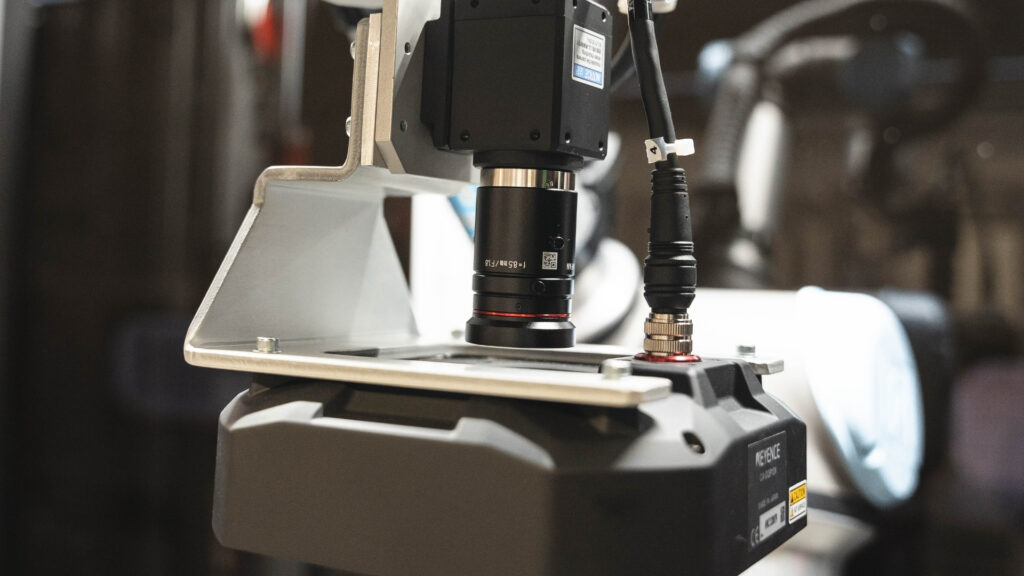
- Vision Inspection That Doesn’t Miss a Thing
Our vision systems perform high-speed, high-accuracy checks in milliseconds, verifying:
- Component placement and orientation
- Surface defects
- Label accuracy
- Colour or finish validation
- Barcode or marking presence
Unlike manual inspection, vision systems don’t get tired or distracted—and they can spot details well beyond the capabilities of the human eye.
- Live Feedback and Smart Response
When something goes wrong, our systems don’t wait for an operator to notice. They respond immediately:
- Rejecting non-conforming parts
- Alerting operators with clear messages
- Logging the fault and triggering containment processes
- Preventing the system from moving to the next step until the issue is resolved
This helps reduce rework, scrap, and customer complaints, because faults are caught before they become finished goods.
- Full Traceability for Every Check
All inspection data is automatically logged and tied to a serial number, barcode, or product ID. That means you can trace:
- What was checked
- What values were recorded
- Whether it passed or failed
- When the check happened
- Who was on the line
That’s not just great for internal quality, it’s invaluable for audits, compliance, and continuous improvement.
- Flexible Integration Into Your Workflow
Whether you’re building a single test station or automating an entire line, we make sure real-time checks fit seamlessly into your process, not around it.
Our systems are:
- Modular – Add the checks you need, when you need them
- Configurable – Tailored to your part design and assembly process
- Connected – Ready to send data to your MES, ERP, or quality system
- Supported – With global service and remote diagnostic tools
Know What’s Happening As It Happens
Real-time monitoring isn’t just about catching mistakes. It’s about building a process that’s designed to get it right the first time, with fewer faults, faster feedback, and better use of your team’s time.
We’ve helped manufacturers across automotive, electronics, and industrial sectors move from reactive to proactive quality, through automation that sees, senses, and responds at every step.
Let’s Build a Process You Can Rely On
If your assembly line still relies on manual checks or final-stage inspection to catch errors, there’s a better way.
Talk to ALPHR today about how we can introduce smart sensoring, vision inspection, and live process validation into your workflow, so every part that leaves your line is one you can be proud of.