

If your production line’s OEE isn’t where it should be, you’re not alone. It’s one of the most common frustrations we hear from manufacturers.
Whether it’s unpredictable cycle times, a higher-than-expected failure rate, or processes that just don’t repeat as cleanly as they should, low OEE doesn’t just hurt performance; it eats into profit, creates bottlenecks, and undermines customer confidence.
At ALPHR, we help manufacturers tackle these challenges every day. And while there are many factors that can impact OEE, we’ve found that smart, targeted automation is one of the fastest and most effective ways to turn things around.
What’s Really Behind Low OEE?
Let’s break it down. OEE is a measure of how effectively your equipment is running. It takes into account three key areas: availability, performance, and quality.
If you’re struggling with low OEE, it often means one or more of the following is happening:
- Cycle times are inconsistent – Machines or manual processes aren’t keeping to schedule, making it hard to plan and optimise output.
- Output quality is variable – Too many parts are failing, needing rework, or being scrapped entirely.
- Processes lack repeatability – What works well on one shift doesn’t always carry over to the next. Small variations cause big issues over time.
Sound familiar? These are exactly the kinds of issues that automation is built to solve.
Why Automation is the Fix
The problem with trying to fix low OEE by tweaking manual processes is that people aren’t machines. Fatigue, distraction, and technique differences all lead to variation, even with clear work instructions.
What automation offers is stability.
At ALPHR, we design systems that remove variability and replace it with repeatability, traceability, and consistency. And that’s the foundation for strong OEE.
Here’s how we help improve each component of your OEE score:
- Performance: Fixing Variable Cycle Times
One of the biggest contributors to poor performance is the inability to keep cycle times consistent. If you’re relying on manual operations, it’s tough to maintain a steady rhythm.
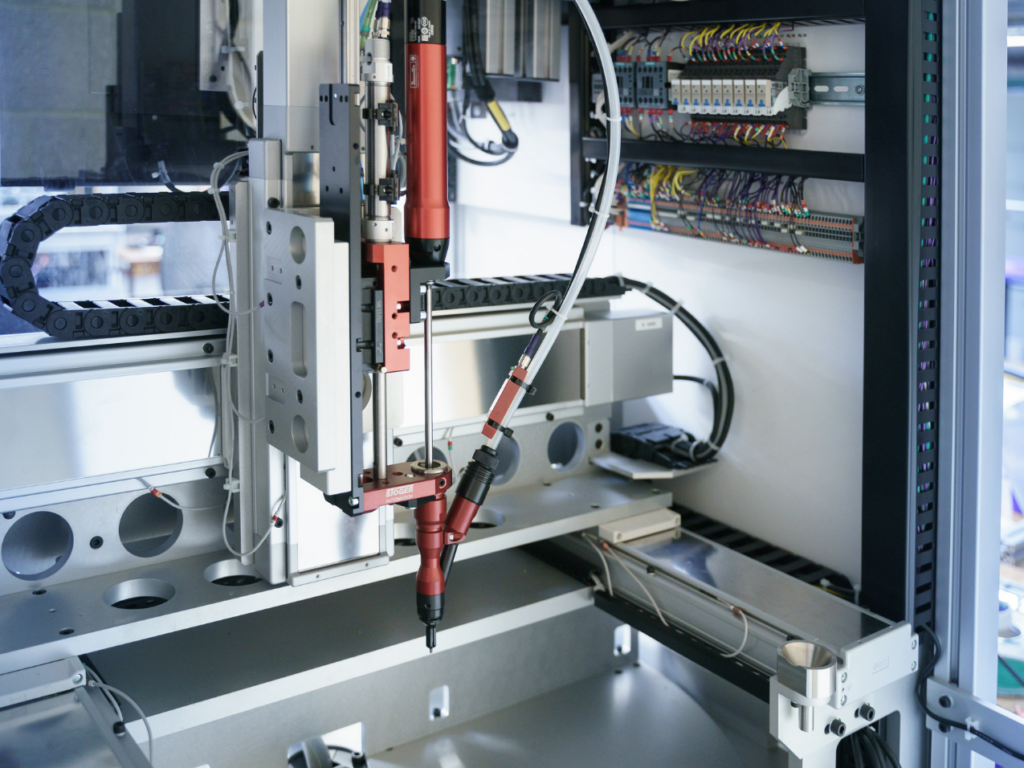
Our automation solutions are engineered for fixed, repeatable cycle times. Whether it’s an end-of-line test system or an automated screwdriving station, we ensure that each cycle runs within a precise time window, every time.
We’ve delivered systems that not only keep cycle time steady but also adapt dynamically to product variants without compromising speed. That means no slowdowns and no guesswork when you’re scheduling production.
- Quality: Reducing Defects and Rework
Poor product quality is a double blow. It reduces your OEE and increases your costs. Failed parts, rework, and warranty issues all take their toll.
Our machines are built with quality assurance baked in. We use:
- Vision systems for part presence, orientation and alignment checks
- Smart sensors to verify completed processes
- Precision torque tools to ensure fasteners are applied to spec
- Traceability systems to log cycle data, helping you spot trends before they become problems
This approach supports our “No Faults Forward” methodology, which ensures defects are caught in the moment, not downstream where they’re harder to fix.
The result? Fewer failures, fewer stoppages, and a better product every time.
- Availability: Keeping Machines and Teams Running Smoothly
Unexpected downtime kills OEE. Sometimes it’s a machine breakdown. Sometimes it’s an operator absence or a setup that takes too long between runs.
Automation increases availability by removing points of failure. Our systems are:
- Designed for maintainability, with accessible components and remote diagnostics
- Standardised across machines, so operators and engineers don’t have to relearn new systems every time
- Flexible enough to be redeployed for new products or processes without starting from scratch
And because automation doesn’t need rest, cover, or retraining, you’re no longer at the mercy of shift patterns or staffing gaps.
Real-World Results, Not Just Promises
We’ve helped Tier 1 manufacturers lift their OEE scores by replacing variable manual tasks with reliable automated systems. In one case, replacing a manually operated test station with an ALPHR end-of-line solution improved first-time yield by over 20%, simply by eliminating false failures and missed connections.
The best part? These improvements aren’t just about efficiency; they directly impact profit, throughput, and customer satisfaction.
Let’s Get Your OEE Back on Track
If low OEE is dragging down your performance, don’t settle for quick fixes or workarounds. Automation offers a long-term, scalable solution that strengthens your business from the inside out.
At ALPHR, we help you take control, boosting repeatability, improving quality, and giving you a reliable production rhythm you can trust.
Talk to us today, and let’s start building an OEE improvement plan that delivers real results.